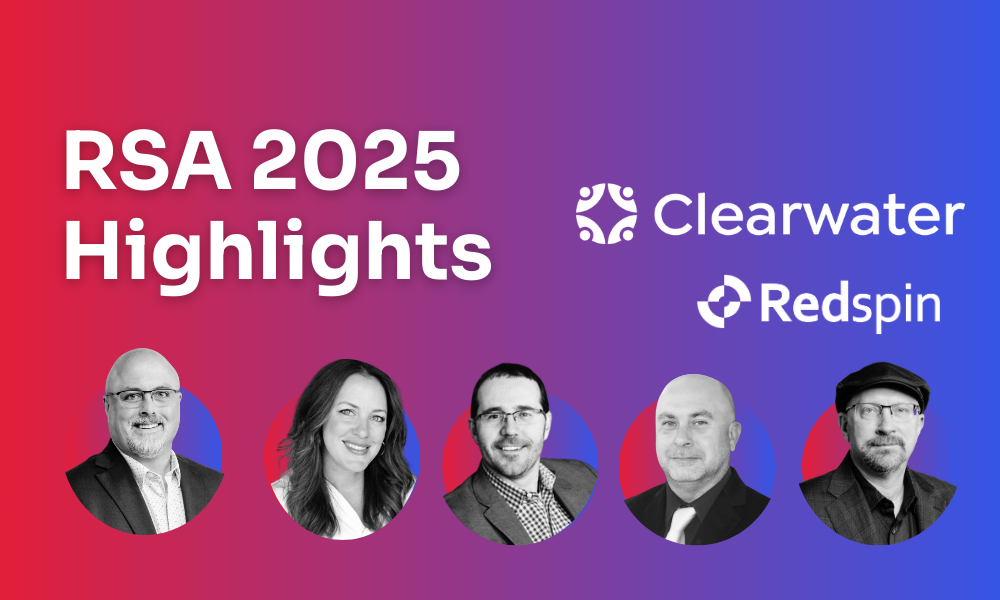
The cybersecurity world descended on San Francisco last week for RSA Conference 2025, and Clearwater was proud to be there alongside our Redspin colleagues. From AI to identity, from innovation to infrastructure, this year’s RSA reflected both the rapid evolution of cybersecurity technology, and the mounting pressure on organizations to stay ahead of new threats. Here’s what stood out to our team on the ground.
AI: The Star, and the Risk Factor, of the Show
Artificial Intelligence dominated the RSA landscape this year. Nearly every vendor touted AI capabilities, and with good reason: the technology is reshaping cybersecurity at breakneck speed. But the narrative wasn’t all rosy. While some vendors positioned AI as a revolutionary tool for enhancing resilience and accelerating threat detection, others acknowledged its darker side- its potential to empower attackers, escalate threats, and widen the gap between those who can afford advanced AI tools and those who cannot.
For healthcare organizations already struggling with limited resources and expanding attack surfaces, the duality of AI is particularly significant. Clearwater continues to monitor how AI is shaping the risk landscape, especially in critical infrastructure environments like hospitals and health systems.
Innovation Everywhere: A Startup Surge and a Glimpse of the Future
Another standout theme? The sheer scale of innovation. From bustling startup pavilions to hallway conversations about quantum computing, RSA 2025 made it clear that the cybersecurity ecosystem is growing in both size and sophistication.
Attendees across industries (including many from healthcare) showed strong interest in what’s next: new ideas, new tools, and how they might help protect patient safety and digital trust in an increasingly complex world.
Identity, Zero Trust, and the Reality of Breach Risk
Amid the buzz, one topic remained firmly grounded in operational necessity: Identity and Access Management (IAM). A flood of vendors focused on IAM and Zero Trust architecture, reinforcing that even amid futuristic innovation, foundational security practices remain essential.
Zero Trust was a particularly dominant message, with vendors repeatedly emphasizing its importance in reducing breach risk- an urgent priority in healthcare given the increase in ransomware attacks targeting medical systems.
Federal Trust, Industry Signals, and Marketing Might
Outside the expo floor, industry sentiment reflected broader concerns. Some attendees voiced skepticism about federal direction, citing recent shakeups at CISA and the disbanding of key cyber advisory councils. At the same time, the marketing muscle on display, full building wraps, branded car fleets, and celebrity entertainment, signaled a growing divide between large-cap vendors and the resource-constrained organizations they often aim to serve.
Final Thoughts: What RSA 2025 Means for Healthcare
RSA 2025 showed us a cybersecurity sector that is innovating rapidly- and fragmenting just as fast. For healthcare organizations, the challenge is clear: separating real value from hype, preparing for the long-term impact of emerging technologies, and staying grounded in proven security practices.
As the landscape continues to shift, Clearwater will be here to help healthcare organizations navigate it- translating policy, technology, and risk into actionable strategies for resilience.
🎥 Want more expert insights? Watch our monthly Cyber Briefing replays here!